Space Facts: 100 Incredible Facts That Will Change the Way You See the Universe
Space has fascinated humanity for thousands of years, and these space facts reveal why the universe continues to inspire scientists, explorers, and curious minds alike. Ancient civilizations looked to the night sky to navigate, tell stories, and understand the changing seasons. Today, powerful telescopes and robotic spacecraft continue to uncover astonishing space facts that reshape our understanding of the cosmos.
Modern observatories and space missions continue to transform our understanding of the universe through discoveries published by organizations such as NASA and the European Space Agency.
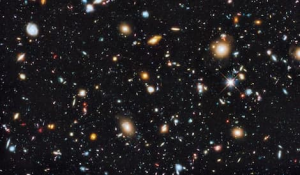
From planets that rain diamonds to galaxies containing hundreds of billions of stars, the cosmos is filled with mysteries waiting to be explored. Scientists estimate that the observable universe contains trillions of galaxies, each with its own collection of stars, planets, moons, and other celestial objects.
In this comprehensive guide, you’ll discover 100 incredible space facts covering the universe, galaxies, stars, planets, black holes, space exploration, and much more. Whether you’re a student, teacher, science enthusiast, or simply curious about the cosmos, these fascinating discoveries will change the way you see the universe.
Related Reading: If you enjoy learning surprising scientific facts, explore our guides on 50 Amazing Facts About the Human Brain and 100 Psychology Facts About Human Behavior for more fascinating insights into science and the human mind.
Table of Contents
- What Is Space?
- How Big Is the Universe?
- Universe Facts
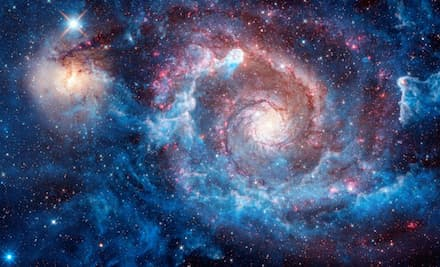
- Galaxy Facts
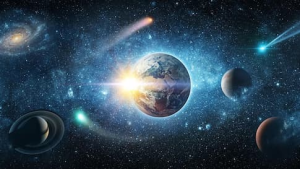
- Solar System Facts
- Planet Facts
- Moon Facts
- Star Facts
- Black Hole Facts
- Space Exploration Facts
- Amazing Space Discoveries
- Space Myths vs. Facts
- Frequently Asked Questions
- Final Thoughts
What Is Space?
Space is the enormous region that begins beyond Earth’s atmosphere. It is not empty, as many people imagine. Instead, space contains planets, stars, galaxies, comets, asteroids, dust, gas, radiation, and even tiny particles moving at extraordinary speeds.
Scientists often describe space as a near vacuum because it contains far fewer particles than Earth’s atmosphere. Even so, gravity, light, and magnetic fields shape the structure and evolution of the universe.
Modern astronomy has shown that space is constantly changing. New stars are born, galaxies collide, planets form, and massive stars explode as supernovae, creating many of the elements that later become part of planets—and even living organisms.
Understanding these space facts helps us appreciate not only the universe around us but also Earth’s place within it.
How Big Is the Universe?
The universe is so vast that its true size remains unknown.
The observable universe—the portion scientists can currently detect—is estimated to be about 93 billion light-years in diameter. Because the universe continues to expand, there may be far more beyond what our telescopes can observe.
To appreciate this scale, consider that light, traveling at nearly 300,000 kilometers (186,000 miles) per second, takes more than four years to reach the nearest star beyond our Sun.
These incredible space facts remind us just how small our planet is compared to the immense cosmos.
Universe Space Facts
1. The universe is approximately 13.8 billion years old.
According to the best available scientific evidence, the universe began with the Big Bang around 13.8 billion years ago. Since then, it has expanded and evolved into the vast cosmos we observe today.
2. The universe is still expanding.
Astronomers have discovered that galaxies continue moving away from one another because space itself is expanding. This means the observable universe grows larger over time.
3. Most of the universe is invisible.
Everything we can see—stars, planets, galaxies, and gas—accounts for only a small fraction of the universe.
Scientists estimate that most of the cosmos consists of dark matter and dark energy, mysterious components that are still not fully understood.
4. Light from distant galaxies shows us the past.
Because light takes time to travel, observing a galaxy millions of light-years away means seeing it as it appeared millions of years ago.
Astronomy is one of the few sciences that literally allows us to look back in time.
5. There may be trillions of galaxies.
Earlier estimates suggested hundreds of billions of galaxies, but newer observations indicate the observable universe may contain trillions of them.
Each galaxy may contain millions, billions, or even hundreds of billions of stars.
6. Space is incredibly cold.
The average temperature of space is about −270°C (−454°F), only a few degrees above absolute zero.
7. Gravity shapes the universe.
Gravity holds planets in orbit around stars, keeps galaxies together, and influences the formation of stars, planets, and galaxy clusters.
Without gravity, the universe would look completely different.
8. Time behaves differently in space.
According to Einstein’s theory of relativity, time passes at different rates depending on gravity and speed.
Astronauts aboard spacecraft experience tiny differences in time compared with people on Earth.
9. Heavy elements were forged inside stars.
Many of the elements found in your body—including carbon, oxygen, calcium, and iron—were created inside ancient stars before being scattered across space.
This has inspired the famous saying that we are made of stardust.
10. The universe continues to surprise scientists.
Every year, astronomers discover new planets, galaxies, and cosmic phenomena that challenge existing theories and expand our understanding of space.
Galaxy Space Facts
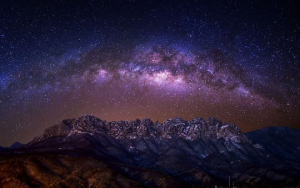
11. The Milky Way is our home galaxy.
Earth, the Solar System, and billions of other stars all belong to the Milky Way Galaxy.
It is a vast spiral galaxy stretching roughly 100,000 light-years across.
Learn more about our galaxy through NASA’s Solar System and Milky Way educational resources.
12. The Milky Way contains hundreds of billions of stars.
Although scientists disagree on the exact number, estimates generally range from 100 billion to 400 billion stars.
Many of these stars likely have planets orbiting them.
13. Our Solar System orbits the center of the Milky Way.
The Solar System travels around the galaxy at an incredible speed of about 828,000 kilometers (514,000 miles) per hour.
Even at that speed, one complete orbit takes roughly 225–250 million years.
14. Some galaxies are much larger than the Milky Way.
Giant galaxies can contain trillions of stars, making our own galaxy appear relatively modest by comparison.
15. Galaxies come in different shapes.
Astronomers classify galaxies into several main types:
- Spiral
- Elliptical
- Irregular
- Lenticular
Each type forms through different evolutionary processes.
16. Galaxies sometimes collide.
Although stars rarely crash into one another during these events because of the immense distances between them, gravitational interactions dramatically reshape both galaxies.
17. The Milky Way and Andromeda are moving toward each other.
Scientists predict these two neighboring galaxies will begin merging in about 4–5 billion years, creating a new, larger galaxy over millions of years.
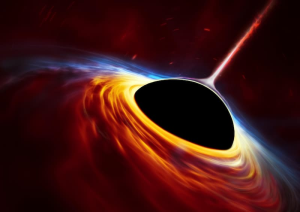
18. Most large galaxies contain supermassive black holes.
At the center of many galaxies lies a black hole with a mass millions—or even billions—of times greater than our Sun.
These enormous objects influence the motion of surrounding stars and gas.
19. Some galaxies are still forming new stars.
Galaxies rich in gas and dust continue producing new stars, while older galaxies have slowed significantly or stopped forming stars altogether.
20. Every new telescope reveals more of the universe.
Modern observatories, both on Earth and in space, continue discovering previously unseen galaxies, helping scientists better understand the history and evolution of the cosmos.
🌌 Did You Know?
If you could travel at the speed of light, it would still take over four years to reach the nearest star beyond our Sun—and tens of thousands of years to cross the Milky Way Galaxy.
This illustrates the immense scale behind even the most basic space facts.
Quick Recap
So far, you’ve learned that:
- The universe is about 13.8 billion years old.
- It continues to expand.
- Most of it is made of mysterious dark matter and dark energy.
- The observable universe may contain trillions of galaxies.
- Our Solar System is just one tiny part of the Milky Way.
- Galaxies evolve, collide, and form new stars over billions of years.
These first 20 space facts provide a foundation for understanding the incredible scale and complexity of the cosmos.
The next space facts take us on a journey through our Solar System, where every planet, moon, and asteroid has a fascinating story to tell.
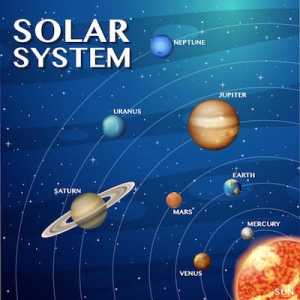
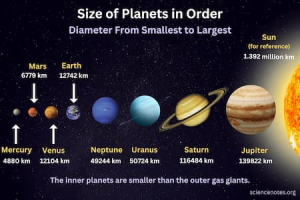
Solar System Space Facts (#21–40)

Leah Awuor is a seasoned content creator and digital storyteller with a passion for crafting narratives that inform, inspire, and engage. With a wealth of experience profiling media personalities, politicians, celebrities, and emerging trends, Leah brings together sharp analytical insight and a natural talent for storytelling.
Her work is recognized for its accuracy, depth, and ability to spark meaningful conversations. As the creative force behind some of Fact-Pedia’s most-read articles, Leah consistently delivers high-impact content that resonates with diverse audiences across the globe.
Driven by curiosity and a commitment to editorial excellence, she covers everything from breaking news to in-depth celebrity profiles and cultural commentary. Leah’s ability to anticipate trends and deliver compelling stories makes her a trusted and influential voice in the digital media landscape.