Human Brain Facts: 50 Amazing Facts About the Human Brain
The human brain facts in this guide reveal why the brain is one of the most extraordinary organs in the known universe. Although it weighs only about 1.3 to 1.4 kilograms (roughly 3 pounds), it controls every thought, memory, emotion, movement, and decision you make. From recognizing familiar faces to solving complex mathematical problems, the brain performs billions of operations every second without you even noticing. These human brain facts will help you understand how this remarkable organ works and why scientists continue to study it.
In this comprehensive guide, you’ll discover 50 amazing human brain facts supported by neuroscience research. Whether you’re a student, teacher, healthcare professional, or simply curious about how your mind works, these facts will help you appreciate the incredible power of the human brain.
Related Reading: After finishing this guide, explore our in-depth article on 100 Psychology Facts About Human Behavior, where you’ll learn how memory, emotions, personality, relationships, and decision-making shape everyday life.
Table of Contents
- What Is the Human Brain?
- How Does the Human Brain Work?
- 50 Amazing Human Brain Facts
- Brain Myths vs. Facts
- Frequently Asked Questions
- Final Thoughts
What Is the Human Brain?
The human brain is the control center of the nervous system. It receives information from your senses, processes that information, stores memories, controls movement, regulates emotions, and coordinates nearly every function required to keep you alive.
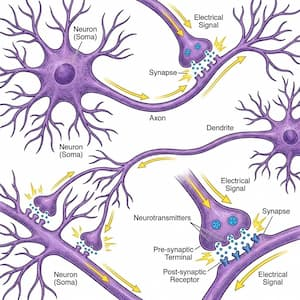
The brain is made up of billions of specialized nerve cells called neurons, which communicate through tiny electrical and chemical signals. These neurons form vast networks that allow you to think, learn, speak, remember, and interact with the world around you.
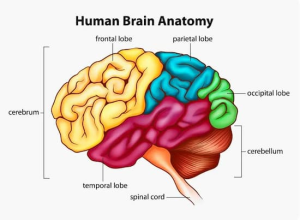
Understanding these human brain facts begins with learning how the brain is organized. Each region performs specialized functions while working together to keep your body alive and your mind active.
- Frontal lobe – decision-making, planning, personality, and voluntary movement.
- Parietal lobe – touch, temperature, and spatial awareness.
- Temporal lobe – hearing, language, and memory.
- Occipital lobe – vision.
- Cerebellum – balance, posture, and coordination.
- Brainstem – breathing, heartbeat, blood pressure, and other automatic functions essential for survival.
Although scientists understand many of these functions, researchers continue to uncover new details about how different brain regions work together.
How Does the Human Brain Work?
Your brain communicates using electrical impulses and chemical messengers known as neurotransmitters. Every thought, movement, memory, or emotion results from billions of neurons sending signals across trillions of connections called synapses.
This communication happens incredibly quickly—often in fractions of a second—allowing you to react to your surroundings almost instantly.
The brain is also highly adaptable. Thanks to a process known as neuroplasticity, the brain can reorganize itself by forming new neural connections throughout life. This ability allows people to learn new skills, recover from certain injuries, and adapt to changing environments.
50 Amazing Human Brain Facts
Before exploring these human brain facts, remember that neuroscience is constantly evolving. Every year, researchers uncover discoveries about memory, intelligence, emotions, learning, and brain health.
1. Your brain contains around 86 billion neurons.
Neurons are the brain’s primary communication cells. Together, they form one of the most complex biological networks ever discovered.
Each neuron can connect with thousands of others, creating trillions of communication pathways that make thinking, learning, and remembering possible.
2. Your brain uses about 20% of your body’s total energy.
Despite representing only about 2% of your body weight, the brain consumes roughly one-fifth of the body’s energy supply.
This constant demand explains why good nutrition, hydration, and sleep are so important for maintaining mental performance.
3. The brain never truly rests.
Even while you sleep, your brain remains active.
During sleep, it organizes memories, regulates hormones, removes waste products, and prepares your body for the next day.
4. Your brain is mostly made of water.
Approximately 73% of the brain consists of water.
Even mild dehydration may affect concentration, memory, mood, and mental performance.
5. Every memory changes your brain.
Learning something new strengthens existing neural connections or creates entirely new ones.
This remarkable ability allows your brain to continue adapting throughout your lifetime.
6. The brain doesn’t feel pain.
Surprisingly, the brain itself has no pain receptors.
While headaches can be extremely painful, the discomfort usually comes from surrounding tissues, blood vessels, muscles, or nerves—not from the brain tissue itself.
7. The left and right sides of your brain constantly work together.
Many people believe they are either “left-brained” or “right-brained.”
Although certain functions are more dominant in one hemisphere, nearly all everyday activities require both sides of the brain to communicate continuously.
8. Your brain processes visual information incredibly fast.
The brain can recognize familiar objects and faces in a fraction of a second.
This rapid processing allows you to navigate busy environments safely and efficiently.
9. Reading physically changes your brain.
Regular reading strengthens neural pathways involved in language, memory, concentration, and imagination.
It also helps improve vocabulary and critical thinking over time.
10. Exercise is one of the best things you can do for your brain.
Physical activity increases blood flow to the brain and supports the growth of new neural connections.
Research also links regular exercise with improved memory, attention, and mood.
11. Stress changes how your brain functions.
Short-term stress may improve alertness during emergencies.
However, chronic stress can interfere with memory, concentration, sleep quality, and emotional regulation if left unmanaged.
12. Your brain automatically filters unnecessary information.
Every second, your senses collect far more information than you consciously notice.
The brain filters most of this data so you can focus on what seems most relevant at the moment.
13. Smell is strongly connected to memory.
Certain scents can instantly bring back vivid memories from years ago.
This happens because the brain regions responsible for smell are closely linked with those involved in emotion and memory.
14. Music activates multiple brain regions simultaneously.
Listening to music stimulates areas responsible for memory, movement, emotion, attention, and creativity.
This broad activation is one reason music can have such powerful emotional effects.
15. Your brain can continue learning throughout your entire life.
Scientists once believed that the adult brain stopped developing after childhood.
Modern neuroscience has shown that the brain remains adaptable throughout life. Learning new languages, developing hobbies, solving puzzles, reading, and practicing new skills all encourage the formation of new neural connections.
These human brain facts show that your brain remains adaptable throughout life, giving you countless opportunities to continue learning and growing.
Brain Facts #16–30: Memory, Learning, Intelligence, and Brain Performance
The human brain is constantly changing based on what you experience, learn, and remember. Every conversation, book, challenge, and new skill leaves its mark by strengthening or creating neural connections. In this section, you’ll discover more fascinating human brain facts about memory, intelligence, focus, creativity, and the incredible adaptability of the brain.
Human Brain Facts About Memory and Learning
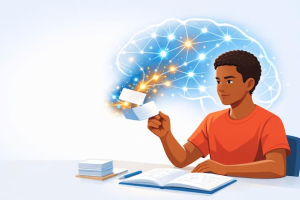
16. Your brain builds memories through networks of neurons.
Contrary to popular belief, memories are not stored in a single “memory center.” Instead, different aspects of an experience—such as sights, sounds, emotions, and locations—are processed and stored across interconnected brain networks.
When you recall a memory, your brain reconstructs it by activating these networks.
17. Recalling information strengthens memory.
Testing yourself is often more effective than repeatedly reading the same material.
Each time you actively retrieve information, you reinforce the neural pathways associated with that memory, making future recall easier.
18. The brain learns best through repetition over time.
Studying a little each day is generally more effective than cramming everything into one long session.
This technique, known as spaced repetition, helps move information into long-term memory.
19. Curiosity improves learning.
When you’re genuinely interested in a topic, your brain pays closer attention and is more likely to remember what you learn.
Curiosity increases motivation and encourages deeper processing of information.
20. Mistakes help your brain grow.
Making mistakes activates learning processes in the brain.
When you recognize and correct an error, your brain adjusts its neural connections, making it easier to avoid the same mistake in the future.
21. Learning a new language changes the brain.
Research shows that learning another language strengthens areas involved in memory, attention, and problem-solving.
It may also improve cognitive flexibility by encouraging the brain to switch efficiently between different sets of rules.
22. Reading regularly strengthens brain connections.
Reading is more than entertainment—it challenges the brain to process language, imagine scenes, understand emotions, and make connections between ideas.
Over time, this supports vocabulary, comprehension, and critical thinking.
23. Writing by hand activates multiple brain regions.
Although typing is convenient, handwriting engages brain areas related to movement, attention, and memory.
Many students find that taking handwritten notes helps them retain information more effectively.
24. Teaching someone else improves your understanding.
Explaining a concept forces you to organize information clearly and identify gaps in your own knowledge.
This is why teaching is considered one of the most effective ways to reinforce learning.
25. Your brain continues adapting throughout adulthood.
Neuroplasticity allows the brain to create new neural pathways in response to learning, experience, and practice.
While learning may become more challenging with age, adults remain capable of developing new skills throughout life.
Human Brain Facts About Attention and Focus
26. Multitasking reduces efficiency.
Many people believe they can perform several complex tasks at the same time.
In reality, the brain usually switches rapidly between tasks rather than processing them simultaneously. This frequent switching can reduce productivity and increase errors.
27. The brain filters out most incoming information.
Every second, your senses receive an enormous amount of data.
To avoid overload, the brain automatically filters much of it, allowing you to focus on what seems most important at the moment.
28. Breaks help maintain concentration.
Working continuously for long periods can reduce attention and mental performance.
Taking short breaks gives the brain time to recover, helping improve focus and productivity when you return to your task.
29. Sleep is essential for attention.
Even one night of insufficient sleep can reduce concentration, reaction time, and decision-making ability.
Consistent, high-quality sleep supports alertness and mental performance throughout the day.
30. Exercise supports healthy brain function.
Regular physical activity increases blood flow to the brain and is associated with improvements in memory, mood, attention, and overall cognitive performance.
Exercise benefits both physical and mental health throughout life.
The human brain facts you’ve learned so far demonstrate how memory, attention, and learning work together to support everyday life.
Brain Spotlight: Neuroplasticity
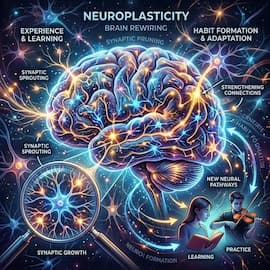
One of the most remarkable discoveries in neuroscience is neuroplasticity—the brain’s ability to reorganize itself by forming and strengthening neural connections throughout life.
Neuroplasticity allows you to:
- Learn new skills.
- Recover some functions after certain brain injuries.
- Adapt to changing environments.
- Improve memory through practice.
- Develop healthier habits.
- Continue learning well into older adulthood.
This adaptability demonstrates that your brain is not fixed; it evolves continuously in response to your experiences and actions.
Want to understand how the brain influences everyday behavior? Read our comprehensive guide on 100 Psychology Facts About Human Behavior, where we explore memory, emotions, relationships, decision-making, and the fascinating science behind human actions.
Human Brain Facts #31–50: Creativity, Emotions, Aging, and Extraordinary Brain Abilities
The more scientists study the brain, the more they discover just how remarkable it is. From generating creative ideas to helping you recognize familiar faces, your brain performs astonishing tasks every second. In this final collection of human brain facts, we’ll explore some of the most fascinating discoveries about intelligence, creativity, emotions, aging, and the incredible adaptability of the human brain.
Human Brain Facts About Creativity and Intelligence
31. Creativity involves multiple parts of the brain.
Creativity isn’t controlled by a single “creative center.” Instead, it emerges from several brain networks working together, including those involved in imagination, memory, attention, and problem-solving.
This collaboration helps explain why creative ideas often arise when you’re connecting seemingly unrelated concepts.
32. Daydreaming can support creative thinking.
Although daydreaming is sometimes viewed as a distraction, allowing your mind to wander can help generate new ideas and solutions.
Many people experience sudden insights while taking a walk, showering, or relaxing because the brain continues processing information in the background.
33. Your brain recognizes faces with remarkable speed.
Humans are exceptionally good at identifying familiar faces.
Specialized brain regions help process facial features rapidly, allowing you to recognize family members, friends, and colleagues almost instantly.
34. The brain predicts what will happen next.
Rather than simply reacting to information, the brain constantly makes predictions based on previous experiences.
This predictive ability helps you read faster, understand speech, and react quickly to changing situations.
35. Every person’s brain is unique.
Just as fingerprints differ from one person to another, every brain develops its own unique pattern of neural connections shaped by genetics, learning, and life experiences.
No two people think in the same way.
Human Brain Facts About Emotions and Decision-Making
36. Emotions help guide decisions.
People often assume that logical thinking and emotions operate separately.
In reality, emotions provide valuable information that helps people evaluate risks, set priorities, and make decisions.
Healthy decision-making usually involves both reasoning and emotional awareness.
37. Positive emotions can improve problem-solving.
Research suggests that positive emotional states may encourage flexible thinking and creativity.
Feeling relaxed and optimistic can make it easier to explore new ideas and identify innovative solutions.
38. Chronic stress can affect brain function.
Long-term stress may interfere with attention, memory, and emotional regulation.
Managing stress through healthy habits, regular exercise, social support, and adequate sleep can help protect overall brain health.
39. Laughter benefits the brain.
Laughing stimulates multiple brain regions associated with emotion, social bonding, and reward.
It may also reduce stress and contribute to an improved sense of well-being.
40. Music can strengthen memory.
Music activates brain areas involved in emotion and long-term memory.
This is why hearing a favorite song can instantly remind you of a specific place, person, or moment from years ago.
Amazing Everyday Brain Facts
41. Your brain can recognize patterns almost instantly.
Pattern recognition allows you to identify letters while reading, recognize voices, detect familiar routes, and interpret facial expressions.
This ability helps humans navigate complex environments efficiently.
42. The brain adapts to new challenges.
Learning a musical instrument, practicing a sport, solving puzzles, or acquiring technical skills encourages the brain to strengthen existing neural pathways and create new ones.
This adaptability continues throughout life.
43. Your brain constantly updates memories.
Memories are not stored like videos.
Each time you remember an event, your brain reconstructs it using stored information, which means memories may change slightly over time as new experiences influence them.
44. The brain works closely with the rest of the body.
The brain communicates continuously with the heart, lungs, digestive system, immune system, and muscles.
Maintaining overall physical health also supports healthy brain function.
45. Hydration supports cognitive performance.
Because the brain is largely composed of water, staying hydrated helps support concentration, attention, and mental performance.
Even mild dehydration may temporarily reduce cognitive efficiency.
Human Brain Facts for Better Brain Health
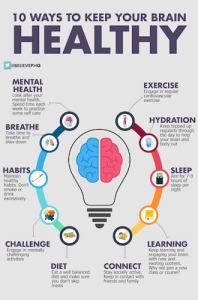
46. Regular physical activity supports lifelong brain health.
Exercise improves blood circulation and supplies the brain with oxygen and nutrients.
Research has linked regular physical activity with better memory, improved mood, and healthier cognitive aging.
47. Healthy eating benefits the brain.
A balanced diet that includes fruits, vegetables, whole grains, healthy fats, and lean proteins provides nutrients that support normal brain function.
Foods rich in omega-3 fatty acids are particularly important for brain health.
48. Lifelong learning keeps the brain active.
Reading books, learning new skills, studying languages, and exploring hobbies continually challenge the brain.
Mental stimulation supports cognitive resilience throughout adulthood.
49. Strong social connections benefit the brain.
Meaningful conversations, friendships, and supportive relationships stimulate thinking, reduce loneliness, and contribute to emotional well-being.
Social engagement is an important part of maintaining brain health.
50. The human brain remains one of science’s greatest mysteries.
Despite centuries of research and remarkable technological advances, scientists are still discovering new insights into how the brain works.
Every discovery helps us better understand learning, memory, emotions, consciousness, and human behavior.
These remarkable human brain facts highlight why the brain continues to be one of the most fascinating areas of scientific research.
Human Brain Facts at a Glance
Here are some of the most surprising takeaways from this guide:
- The human brain contains around 86 billion neurons.
- It uses approximately 20% of the body’s energy despite making up only about 2% of body weight.
- The brain remains active even while you sleep.
- Neuroplasticity allows the brain to adapt and learn throughout life.
- Exercise, sleep, healthy eating, and lifelong learning all support brain health.
- Emotions play a vital role in decision-making.
- Memories are reconstructed rather than replayed exactly as they happened.
- Every person’s brain develops uniquely based on both biology and experience.
- Creativity depends on multiple interacting brain networks.
- Scientists continue to make exciting discoveries about the brain every year.
Interested in understanding why people think and behave the way they do? Continue reading our comprehensive guide to 100 Psychology Facts About Human Behavior, where you’ll discover fascinating insights into memory, emotions, habits, relationships, and decision-making.
Brain Myths vs. Facts
Despite decades of scientific research, many misconceptions about the human brain continue to circulate online. Understanding the difference between myth and reality can help you appreciate how this remarkable organ truly works.
Some human brain facts surprise people because they challenge myths that have been repeated for decades.
| Myth | Scientific Fact |
|---|---|
| Humans only use 10% of their brains. | False. Brain imaging studies show that nearly every part of the brain has a function and becomes active at different times depending on the task being performed. |
| People are either left-brained or right-brained. | False. While some functions are more dominant in one hemisphere, most daily activities involve both sides of the brain working together. |
| Brain cells never regenerate. | Partly false. Although many neurons last a lifetime, researchers have found that certain areas of the brain can produce new neurons under specific conditions. |
| Intelligence is fixed at birth. | False. Learning, education, nutrition, environment, and life experiences all influence cognitive development throughout life. |
| Listening to classical music automatically makes you smarter. | Mostly false. Music may improve mood and concentration for some people, but no evidence that simply listening to classical music permanently increases intelligence. |
| Memory works like a video recorder. | False. Memories are reconstructed each time they’re recalled and can be influenced by new information and experiences. |
| Older adults can’t learn new skills. | False. Thanks to neuroplasticity, people can continue learning throughout life, although the learning process may change with age. |
| Bigger brains always mean higher intelligence. | False. Intelligence depends on the organization and efficiency of neural networks, not simply brain size. |
How to Keep Your Brain Healthy
While genetics influence brain development, daily habits play a major role in supporting brain health. Here are science-backed ways to keep your brain functioning at its best.
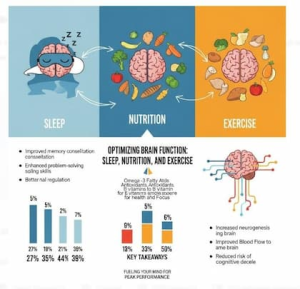
1. Prioritize Quality Sleep
Adults generally benefit from getting enough quality sleep each night. During sleep, the brain consolidates memories, clears waste products, and restores important biological processes.
2. Stay Physically Active
Regular exercise improves blood flow to the brain and supports learning, memory, and emotional well-being.
Activities such as walking, cycling, swimming, dancing, and strength training all contribute to better brain health.
3. Eat a Balanced Diet
A nutritious diet rich in vegetables, fruits, whole grains, healthy fats, lean proteins, nuts, and fish provides nutrients essential for healthy brain function.
4. Challenge Your Mind
Learning a language, reading books, solving puzzles, playing strategy games, and developing new hobbies encourage lifelong learning and stimulate neural connections.
5. Manage Stress
Long-term stress may affect memory, concentration, and emotional regulation.
Relaxation techniques, exercise, mindfulness, and supportive relationships can all contribute to healthier stress management.
6. Stay Socially Connected
Meaningful conversations and strong relationships help stimulate thinking while supporting emotional well-being.
Social interaction remains important throughout every stage of life.
7. Stay Hydrated
Because the brain is composed largely of water, maintaining hydration supports concentration, attention, and overall cognitive performance.
Frequently Asked Questions (FAQs)
Below are answers to some of the most frequently asked questions about human brain facts and how the brain works.
1. What is the human brain?
The human brain is the body’s control center. It processes information, controls movement, regulates emotions, stores memories, and coordinates nearly every bodily function.
2. How many neurons are in the human brain?
Scientists estimate that the average adult brain contains approximately 86 billion neurons connected through trillions of synapses.
3. How much does the human brain weigh?
The average adult human brain weighs about 1.3 to 1.4 kilograms (around 3 pounds).
4. Does the brain feel pain?
No. Brain tissue itself lacks pain receptors. Headaches usually originate from surrounding tissues, nerves, muscles, or blood vessels.
5. Can adults grow new brain cells?
Research suggests that certain brain regions can generate new neurons under specific conditions, although this process is limited compared with early development.
6. What is neuroplasticity?
Neuroplasticity is the brain’s ability to reorganize itself by forming and strengthening neural connections in response to learning and experience.
7. Does reading improve the brain?
Yes. Reading activates areas involved in language, memory, imagination, and critical thinking while strengthening neural connections.
8. Why is sleep important for the brain?
Sleep helps consolidate memories, regulate emotions, remove waste products, and prepare the brain for learning the following day.
9. Can exercise improve brain function?
Yes. Regular physical activity improves blood flow to the brain and has been associated with better memory, mood, attention, and cognitive performance.
10. Is multitasking good for the brain?
Not usually. The brain generally switches rapidly between tasks rather than performing several complex tasks simultaneously, which can reduce efficiency and increase mistakes.
11. Can the brain continue learning throughout life?
Absolutely. Neuroplasticity allows people to continue developing new skills and knowledge well into older adulthood.
12. Which foods support brain health?
Foods rich in healthy fats, omega-3 fatty acids, vegetables, fruits, whole grains, nuts, seeds, and lean proteins provide nutrients that support normal brain function.
13. Why do smells trigger memories?
Brain regions responsible for smell are closely connected to those involved in emotion and memory, making certain scents especially effective at evoking past experiences.
14. Is intelligence determined only by genetics?
No. Genetics plays a role, but education, nutrition, environment, sleep, physical activity, and life experiences also influence cognitive development.
15. What is the most fascinating fact about the human brain?
Many scientists consider neuroplasticity one of the brain’s most remarkable abilities because it demonstrates that the brain can continue adapting and learning throughout life.
Final Thoughts

These human brain facts demonstrate that the brain is one of the greatest wonders of biology. From storing memories and generating emotions to controlling movement and supporting creativity, the human brain performs countless complex tasks every second. The more scientists study the brain, the more fascinating human brain facts they continue to discover.
Although researchers have uncovered many fascinating insights, countless mysteries remain. Ongoing discoveries in neuroscience continue to expand our understanding of how the brain works and how we can protect and improve brain health.
Whether you’re interested in science, education, psychology, or simply understanding yourself better, learning about the human brain is a lifelong journey filled with remarkable discoveries.

Leah Awuor is a seasoned content creator and digital storyteller with a passion for crafting narratives that inform, inspire, and engage. With a wealth of experience profiling media personalities, politicians, celebrities, and emerging trends, Leah brings together sharp analytical insight and a natural talent for storytelling.
Her work is recognized for its accuracy, depth, and ability to spark meaningful conversations. As the creative force behind some of Fact-Pedia’s most-read articles, Leah consistently delivers high-impact content that resonates with diverse audiences across the globe.
Driven by curiosity and a commitment to editorial excellence, she covers everything from breaking news to in-depth celebrity profiles and cultural commentary. Leah’s ability to anticipate trends and deliver compelling stories makes her a trusted and influential voice in the digital media landscape.